Asking the cards
Will I get the job?
Cards that lean yes
Cards that lean no
Cards that say wait
The interview was Tuesday. It is now Sunday night, and you have replayed your answer about "a time you handled conflict" roughly forty times. You want someone to tell you it went fine. The cards cannot see the panel's scoring sheet, but they can show how you are carrying the wait and what to do with your energy before the email arrives.
How to ask it
"Will I get the job?" is a weak question because the decision sits in someone else's inbox, and a card cannot reach it. A yes makes you complacent and a no makes you spiral, and neither changes what you do on Monday. Try one of these instead:
- What strengths am I underselling about how I came across?
- What do I need to do or say to make my case clearer?
- Is this the role I actually want, or am I chasing a yes?
The third one surprises people. Wanting to be chosen and wanting the job are not always the same thing.
A three-card spread for it
Lay out three cards, left to right:
- What you bring. The skill or quality that stands out in your application or interview.
- What is in the way. Nerves, a gap on your CV, a competing candidate, or just the waiting.
- What to do next. One practical step: a follow-up email, more preparation, another application in parallel.
The three-card spread guide explains how to read them as a single story. If you would like help with the reading itself, Melissa can read this spread for you.
Cards that usually mean yes
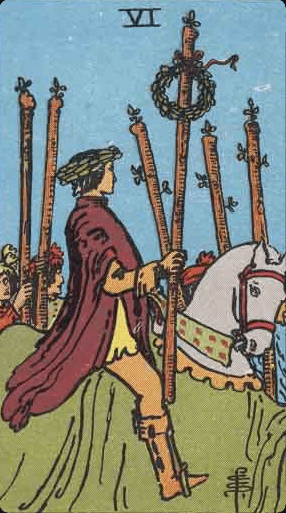
Six of Wands shows a rider on a white horse with a laurel wreath on his staff, a crowd cheering below. It is the closest the deck gets to "congratulations", and it often turns up when your work is being noticed.
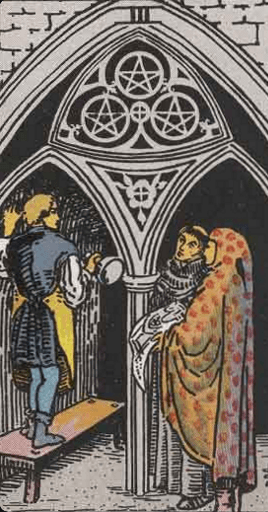
Three of Pentacles has a craftsperson in a cathedral arch, consulting two others over plans. For a job question, it points to being a good fit with a team, and to the people who have already seen you work well.
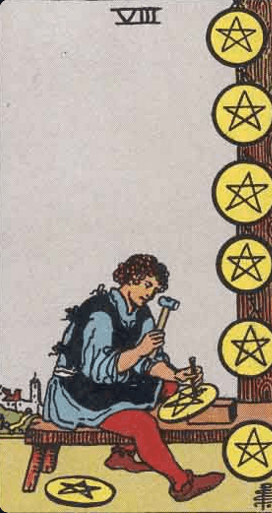
Eight of Pentacles is an apprentice carving pentacles one at a time. It reads as yes because it rewards preparation: the practice answers, the portfolio, the extra hour on the cover letter all count.
Cards that usually mean no
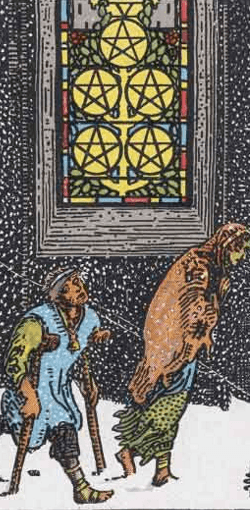
Five of Pentacles shows two figures in the snow past a lit church window. It signals scarcity and feeling shut out, and in a job reading it can mean this door is not the one that opens. A warm light does show in the window, so help is still close by.
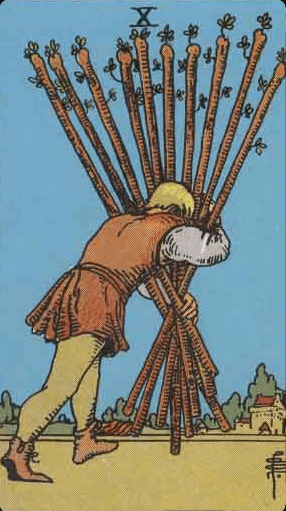
Ten of Wands is a man bent under ten heavy staves. It can mean the role would be too much, not that you are unfit. Ask whether you really want this workload.
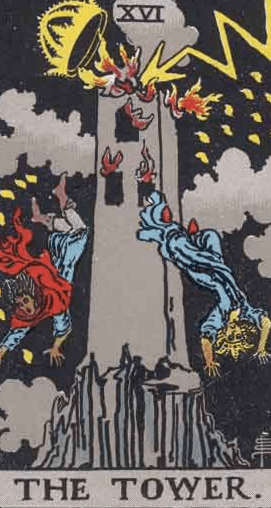
The Tower has lightning striking a crown from a high building and figures falling. It is sudden disruption: a restructure, a hiring freeze, a surprise. It says plans can collapse for reasons that have nothing to do with you.
Cards that usually mean wait
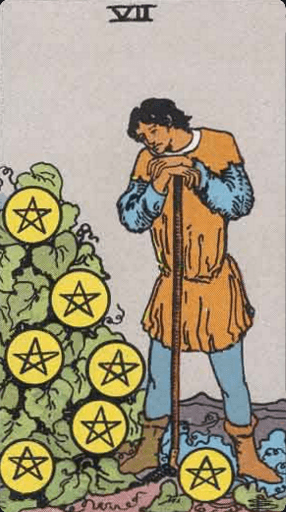
Seven of Pentacles shows a gardener leaning on his hoe, looking at a bush of pentacles. The work is done and the harvest has not come yet. Checking your email every ten minutes will not ripen it.
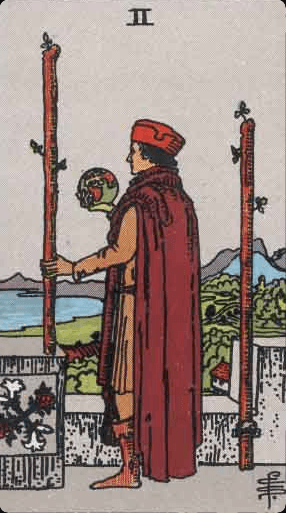
Two of Wands is a figure on a battlement holding a globe, with a second staff beside him. You have options, and you are deciding how far to reach. Keep applying elsewhere.
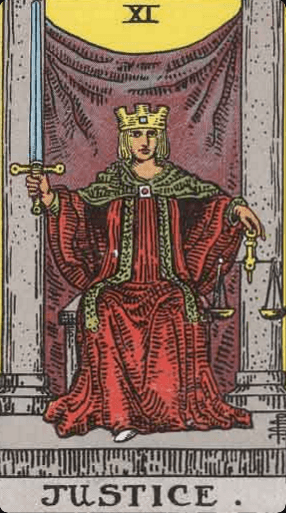
Justice holds scales and a raised sword. Decisions are being weighed, probably slowly and with paperwork. It is fair, not fast.
If you want a quick lean on a single decision, read yes or no tarot. If the job would mean a different city, Should I move? may be the next question.
What to do with the answer
Take the card's advice, not the card's prediction. A yes card is a reminder of what you already said well, so write down three strengths and keep them handy. A no card is a prompt to ask whether the role fits you, and to keep other options warm. A wait card means do something useful with the days: send the thank-you note, tidy your CV, apply for one more thing. Then close the tab.
Frequently asked questions
Can tarot tell me if I will get the job?
Not with certainty. Tarot is a way to reflect on your confidence, your preparation and what you want from the role, not a source of hiring decisions. It is more useful for deciding how to spend the waiting days than for predicting the email.
What if I pull the Tower before an interview?
Do not panic. It is a dramatic card, but it often shows up for nerves and the sense that a lot hangs on one meeting. Prepare as usual, accept that some things are out of your hands, and remember that even a collapse can clear room for a better fit.
Should I pull cards again if I do not like the answer?
Better not. Redrawing until you get the Six of Wands only trains you to ignore anything else. If a card unsettles you, sit with it for a minute and ask what it is pointing at. That is usually the useful part.